
GTE-8075
Bio-Based TPE for Footwear Foam
70% Bio-Based Content · 50% Foam Rebound
GTE-8075 Bio-Based TPE
70% Bio-Based Content and 50% Foam Rebound for Footwear Development
70% biobased content and 50% foam rebound resilience for material sourcing and footwear performance
Footwear developers are looking to introduce more biobased raw materials while maintaining comfortable elastic recovery. GTE-8075 is a thermoplastic elastomer (TPE) with 70% biobased content and a reported foam specimen rebound resilience of 50%. It offers a material selection direction for shoe midsoles, functional insoles and cushioning foam products, bringing raw material sourcing and in-use performance into the same design process.

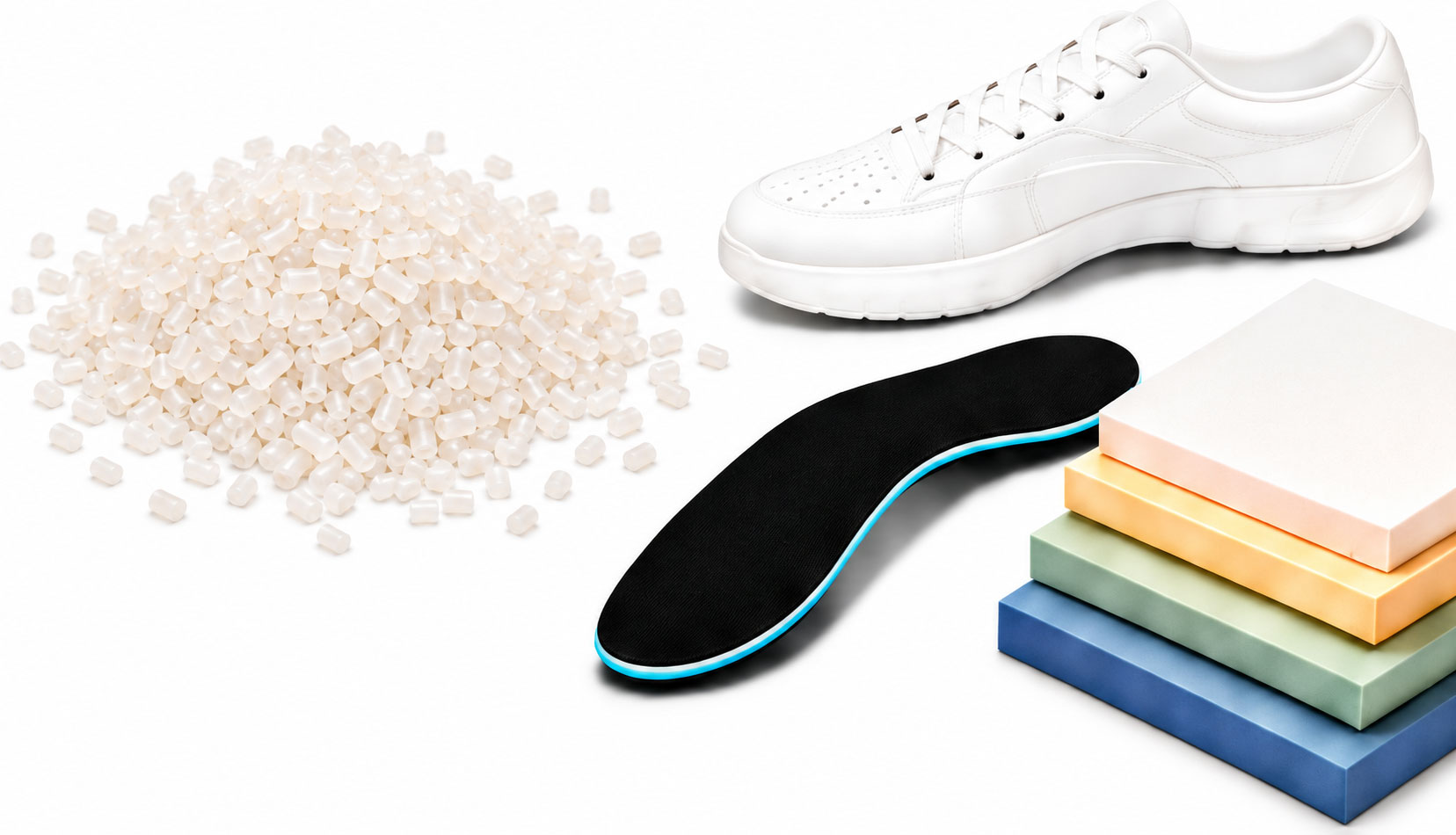
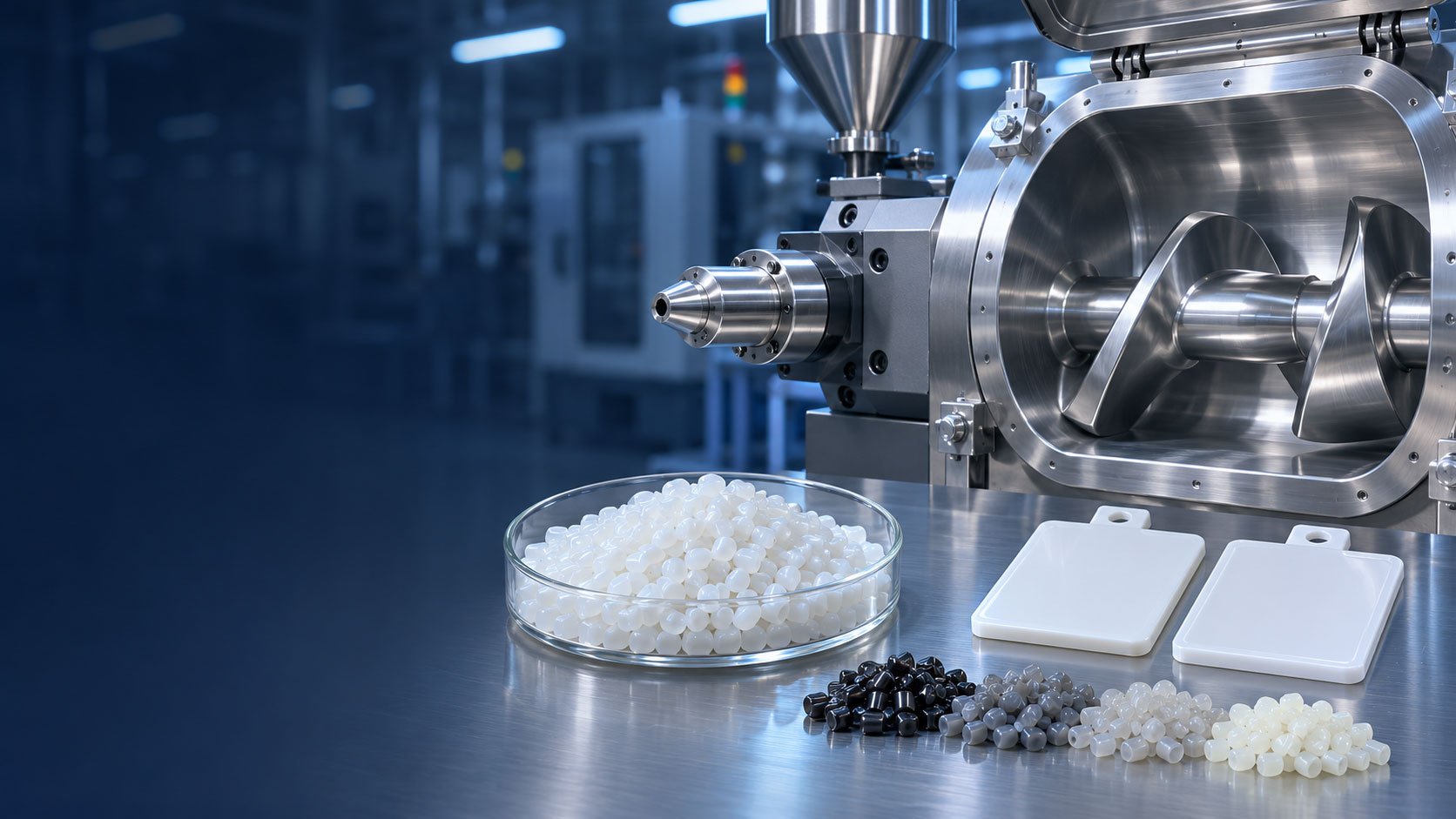
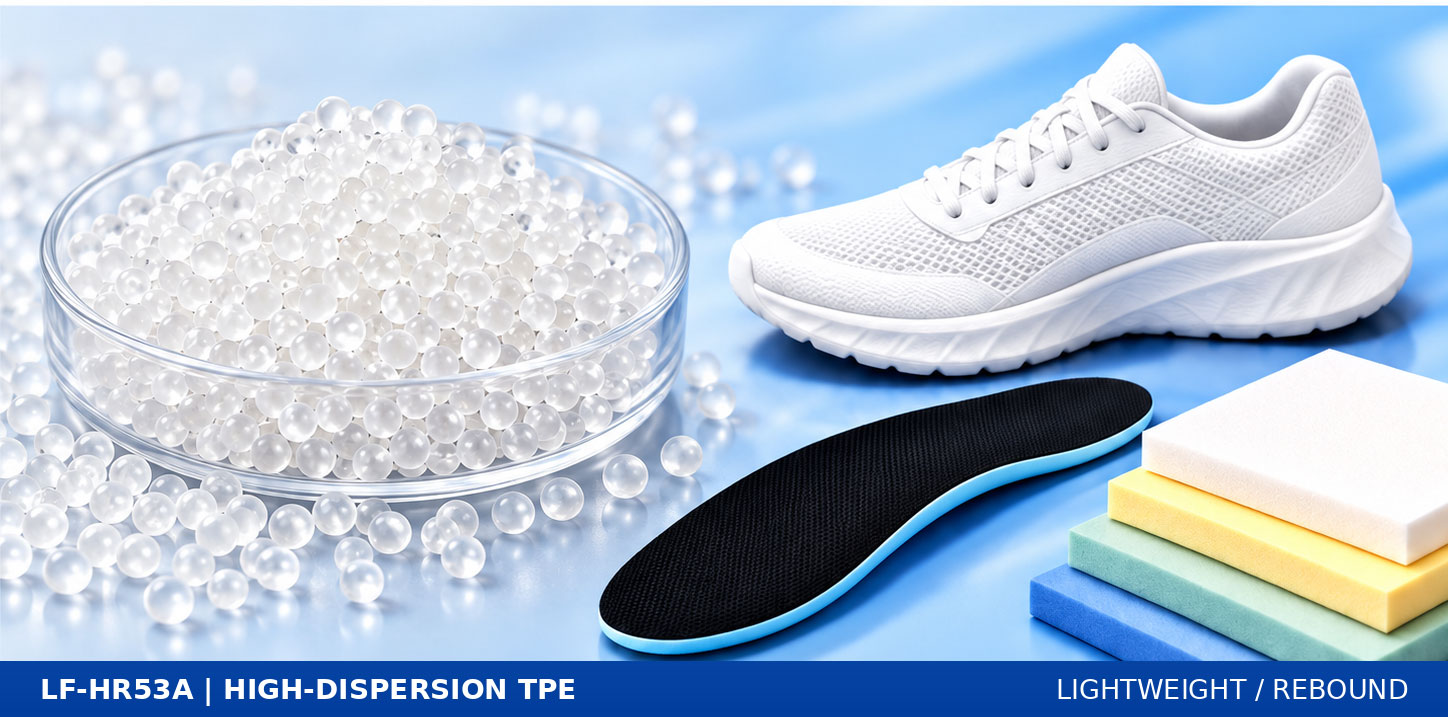
Figure 1 Conceptual illustration of loose pellets and footwear applications; not a photograph of actual GTE-8075 test specimens.
| Raw materialbiobased content | Foam specimenrebound resilience | Foam specimenhardness and density |
|---|---|---|
| 70% | 50% | 49 Asker C / 0.19 g/cm³ |
Biobased content is the value reported for the raw material. The content of a blended finished product must be confirmed against the complete formulation and the applicable testing basis.
Introducing biobased materials while considering elastic recovery
GTE-8075 brings biobased sourcing and foam rebound resilience into one development approach. Developers seeking to adjust raw material composition while maintaining footwear comfort can start with an existing EVA/POE formulation, assess incorporation levels step by step, and use trials to confirm whether the resulting hardness, density and rebound meet product requirements.
70% biobased content puts raw material sourcing into focus
GTE-8075 has a reported biobased content of 70%, providing an option for introducing raw materials from renewable sources and a development pathway toward reduced reliance on fossil-derived feedstocks. For footwear and cushioning products, the value of biobased materials lies in translating sourcing targets into formulation design, specimen validation and finished-product communication.
The product biobased content test method is ASTM D6866. This method measures biobased carbon content; it does not directly indicate the weight fraction of renewable raw materials in the complete formulation. A value of 70% must not be interpreted as a 70% reduction in carbon emissions. External biobased claims should follow the sample scope and calculation basis stated in the formal test report. [1]
Biobased sourcing does not by itself establish biodegradability or compostability. Claims about energy savings, carbon reduction or service-life benefits require evaluation using actual processing data, durability testing and life-cycle information. Small-batch trials and parameter records can help identify opportunities to reduce trial-material waste and molding defects.
50% foam rebound resilience supports comfort development
Softness and rebound resilience are different material selection criteria. GTE-8075 foam specimens have a reported rebound resilience of 50%, a hardness of 49 Asker C and a density of 0.19 g/cm³. These values provide an initial reference for developing midsole or insole elastic response. Observing deformation and recovery during trials helps identify a feel suited to the intended product.
Rebound values must be interpreted together with specimen thickness, density, hardness and molding conditions. They cannot be directly converted into whole-shoe energy return. Finished products also require structural design review, dynamic compression testing and wear evaluation to confirm comfort and support in use.

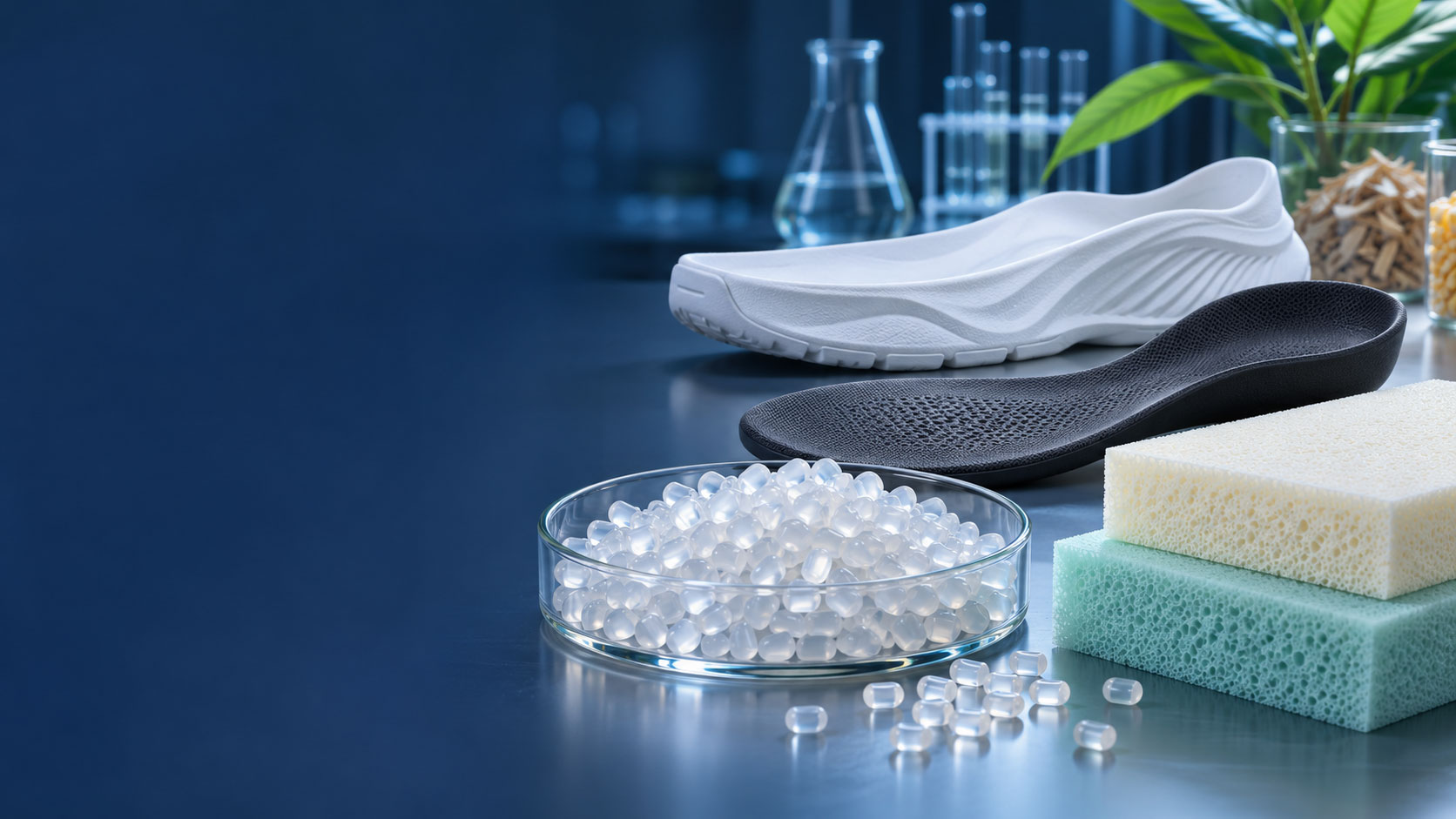
Figure 2 Conceptual applications in shoe midsoles, functional insoles and foam products; not photographs of actual products.
Potential applications include shoe midsoles, functional insoles and cushioning foam components. Suitability must be confirmed through formulation trials and finished-product validation.
Foam specimen properties
Foam specimen data provide an initial basis for assessing rebound, weight and strength. In addition to rebound resilience, evaluate tensile strength, tear strength, shrinkage and compression set to determine whether the material meets repeated-loading requirements.
| Property | Reported method | Unit | Result |
|---|---|---|---|
| Hardness | ASTM D2240 | Asker C | 49 |
| Density | ASTM D792 | g/cm³ | 0.19 |
| Tensile strength | ASTM D638 | kgf/cm² | 15.4 |
| Elongation at break | ASTM D638 | % | 245 |
| Tear strength | ASTM D624 | kgf/cm | 8 |
| Rebound resilience | ASTM D2632 | % | 50 |
| Compression set | ASTM D395 | % | 52 |
| Shrinkage | ASTM D955 | % | 0.5 |
| Expansion ratio E/R | — | % | 160 |
E/R is reported as 160%. Its definition, calculation basis and test method require confirmation; do not directly convert this figure into a volumetric expansion ratio.
Raw material properties
| Property | Reported method or conditions | Unit | Result |
|---|---|---|---|
| Appearance | — | — | Pellets |
| Color | — | — | Translucent |
| Hardness | ASTM D2240 | Shore A | 73 |
| Melt flow index | ASTM D1238190°C / 2.16 kg | g/10 min | 4.5 |
| Density | ASTM D792 | g/cm³ | 0.92 |
| Tensile strength | ASTM D638 | kgf/cm² | 90 |
| Elongation at break | ASTM D638 | % | 645 |
| Tear strength | ASTM D624 | kgf/cm | 50 |
| Biobased content | ASTM D6866 | % | 70 |
| Melting point | DSC | °C | 82 |
Values are reference data from the product information, not guaranteed production specifications. Interpret raw material and foam specimen results separately. Refer to formal reports for test methods, hardness scales, specimen conditions and batch variation.
Gradual incorporation into existing EVA and POE formulations
GTE-8075 has good compatibility with EVA and POE, providing a starting point for evaluating biobased material incorporation into existing footwear formulations. Begin with small-batch trials to check compounding dispersion, flow and foam molding performance. Then adjust incorporation levels to meet rebound, hardness and density targets, progressively establishing processing conditions suited to the actual equipment.
Processing routes to evaluate include injection molding, foaming, compression molding and hot pressing. When introducing a new formulation, record compounding and molding temperatures, times, crosslinking and foaming conditions, and cooling methods. Observe cell structure, surface quality, dimensions and demolding behavior so that material selection and process adjustment develop together.
Plan trials and validation around product requirements
For shoe midsoles, establish target hardness, molded density and thickness, then assess rebound and dynamic compression to confirm comfort and support. For functional insoles, plan trials around foot-contact areas, thickness distribution and recovery requirements, and observe deformation and fit after repeated compression.
For cushioning foam products, start with the loading mode and service environment. Assess cell uniformity, tensile strength, tear strength, shrinkage and compression set. Where durability or service-life targets apply, conduct cyclic compression and aging tests to support product claims with measured data.
Bringing biobased sourcing and elastic response into products
With 70% biobased content and 50% foam specimen rebound resilience, GTE-8075 offers a development direction that considers both raw material sourcing and elastic performance. Incorporate it progressively into existing formulations, adjusting target hardness, density and product structure so that biobased material selection and comfortable underfoot feel develop together.
Request free samples for biobased footwear development
Contact us to request free GTE-8075 test samples for trials and property evaluation based on your product requirements. We also offer customized material development guidance. Share your intended application, biobased material targets, existing EVA/POE formulation, and target hardness, density and rebound requirements so we can help plan formulation adjustments and sample development. Together, we can explore a material solution that balances biobased sourcing, processing performance and underfoot comfort.
Source: GTE-8075 product information and property tables. Images are conceptual illustrations of materials and applications.
[1] ASTM International ASTM D6866 scope for biobased carbon content testinghttps://store.astm.org/standards/d6866