
IUS-4065
Ultra-Soft, Low-Shrink Elastomer
A solution for softness, rebound and dimensional stability in EVA and POE foam formulations.
Why Ultra-Soft Midsoles Are Prone to Secondary Shrinkage
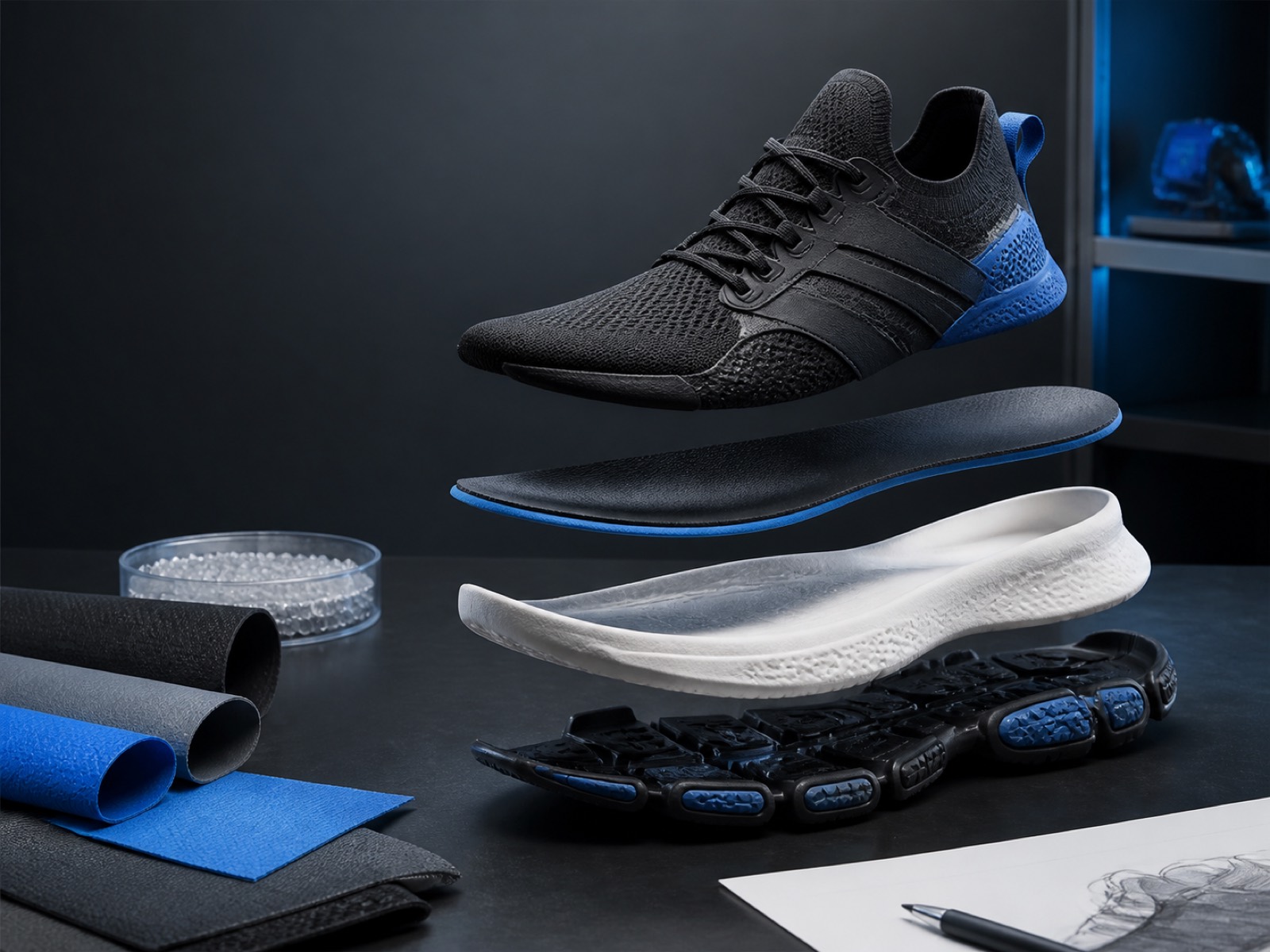
Low-hardness POE improves softness and feel, but secondary heating can relax the foam structure and cause edge shrinkage, warping, dimensional deviation and lamination misalignment. The real development challenge is to reduce hardness while maintaining rebound and controlling dimensional change after heating and lamination.
Softness
Lower finished-product hardness for improved cushioning, conformity and underfoot comfort.
Processing Stability
Reduce secondary dimensional change after baking, hot pressing and lamination.
Production Yield
Reduce left-right variation, lamination misalignment and batch-to-batch appearance variation.
The Material-Selection Trade-Off: Softer Materials Can Shrink More Under Heat
To achieve exceptional softness and high rebound, midsole formulations often use TAFMER™ or ENGAGE™ POE. TAFMER™ DF640 and ENGAGE™ 8842 typically measure Shore A 54–56 and offer excellent softness and feel, but their melting transition is below 50°C. Lamination, baking or hot pressing above this range can relax the foam structure and increase the risk of secondary shrinkage, edge contraction and warping.
| Material | Raw-material hardness | DSC melting peak | Primary advantage | Formulation and processing considerations |
|---|---|---|---|---|
| TAFMER™ DF640 | Approx. 54–56A | Below 50°C | Good softness and feel | Dimensional stability after reheating must be validated |
| ENGAGE™ 8842 | Approx. 54–56A | Below 50°C | Good softness and elasticity | Thermal shrinkage may occur after lamination and baking |
| IUS-4065 | Approx. 40A | Approx. 64°C | Lower hardness and good flexibility | Wider thermal-processing window; finished-product shrinkage must still be validated in the actual formulation |
Melting peak is not the only factor determining finished-product shrinkage. EVA ratio, crosslinking system, expansion ratio and secondary-processing conditions all affect the final result. This page uses a comparative formulation test at 70°C for 40 minutes for practical validation.
Product Advantages
Lower Hardness
In the same 60/40 PHR comparative formulation, IUS-4065 foam reaches Asker C 35 for a softer step-in and cushioning feel.
Wider Secondary-Processing Window
A DSC melting peak of approximately 64°C helps reduce premature softening and structural relaxation during lamination, baking or hot pressing.
Significantly Lower Thermal Shrinkage
Thermal shrinkage is 0.92% after 40 minutes at 70°C, approximately 71–74% lower than the DF610 and ENGAGE 8842 comparative formulations.
Improved Elongation
Elongation at break reaches 252.36%, approximately 9–11% higher than the two comparative formulations, demonstrating good flexibility.
Rebound Maintained
Even with substantially lower hardness, ball rebound remains at 60%, balancing softness and elasticity.
Formulation and Production Support
Starting formulations, samples, physical-property testing and production validation can be provided according to target hardness, expansion ratio, density and dimensional-shrinkage requirements.
Designed for EVA and POE Foam Systems
IUS-4065 is a high-performance elastomer modifier with a material hardness of approximately Shore A 40 and a DSC melting peak of approximately 64°C. A suitable EVA/POE ratio, crosslinking system and foaming conditions can improve dimensional retention after secondary processing.
It is not a general-purpose TPE focused only on low hardness; it is designed to address the development challenge of balancing softness, rebound and dimensional stability.
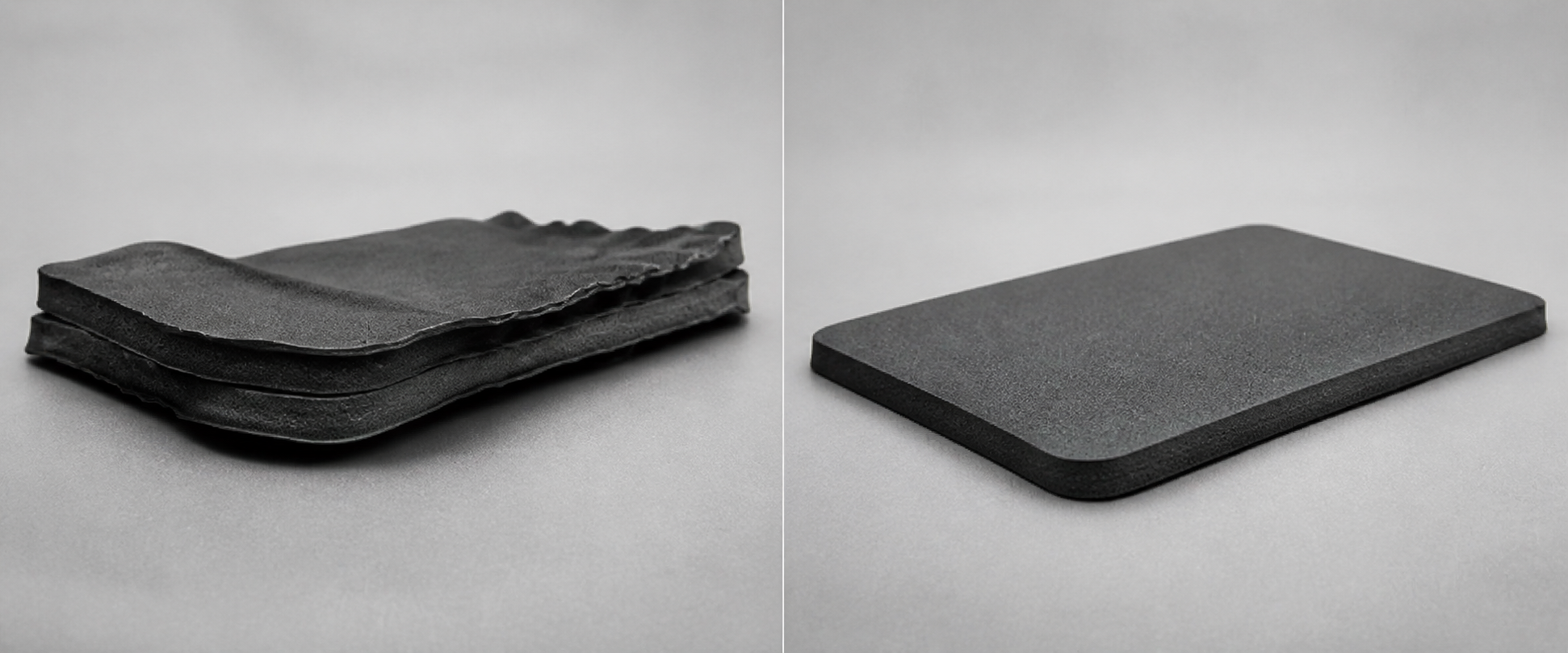
Internal Performance Validation
EVA 7470M/comparison material = 60/40 PHR; expansion ratio 160%. Data are typical values under the specified formulation and conditions.


Soft Does Not Have to Mean Shrink-Prone — IUS-4065 Balances Flexibility and Heat-Resistant Dimensional Stability
After testing at 70°C for 60 minutes, IUS-4065 shows only 1.38% thermal shrinkage and excellent heat-resistant dimensional stability. Request a sample to validate your formulation and processing conditions.
Complete Property Comparison
| Test item | Unit and condition | DF610 | ENGAGE 8842 | IUS-4065 | Interpretation |
|---|---|---|---|---|---|
| Hardness | Asker C | 41 | 42 | 35 | Softer |
| Specific gravity | g/cm³ | 0.1826 | 0.1875 | 0.1816 | Lowest |
| Tensile strength | kgf/cm² | 19.73 | 19.05 | 18.25 | Slightly lower but comparable |
| Elongation at break | % | 227.65 | 231.43 | 252.36 | Highest |
| Tear strength | kgf/cm | 8.56 | 8.08 | 7.46 | Optimize to requirements |
| Compression set | % 23°C 6h | 28.50 | 29.12 | 31.67 | Slightly higher |
| Thermal shrinkage | % 70°C 40min | 3.60 | 3.20 | 0.92 | Significantly lower |
| Ball rebound | % | 60 | 61 | 60 | Maintained |
| Expansion ratio | % | 160 | 160 | 160 | Same |
IUS-4065 provides lower hardness, higher elongation and substantially reduced thermal shrinkage. Tensile and tear strength are slightly lower and compression set is slightly higher, so the formulation should be optimized for actual product requirements.
Product Characteristics
| Item | Typical IUS-4065 Data |
|---|---|
| Product type | Ultra-soft, low-shrink elastomer modifier |
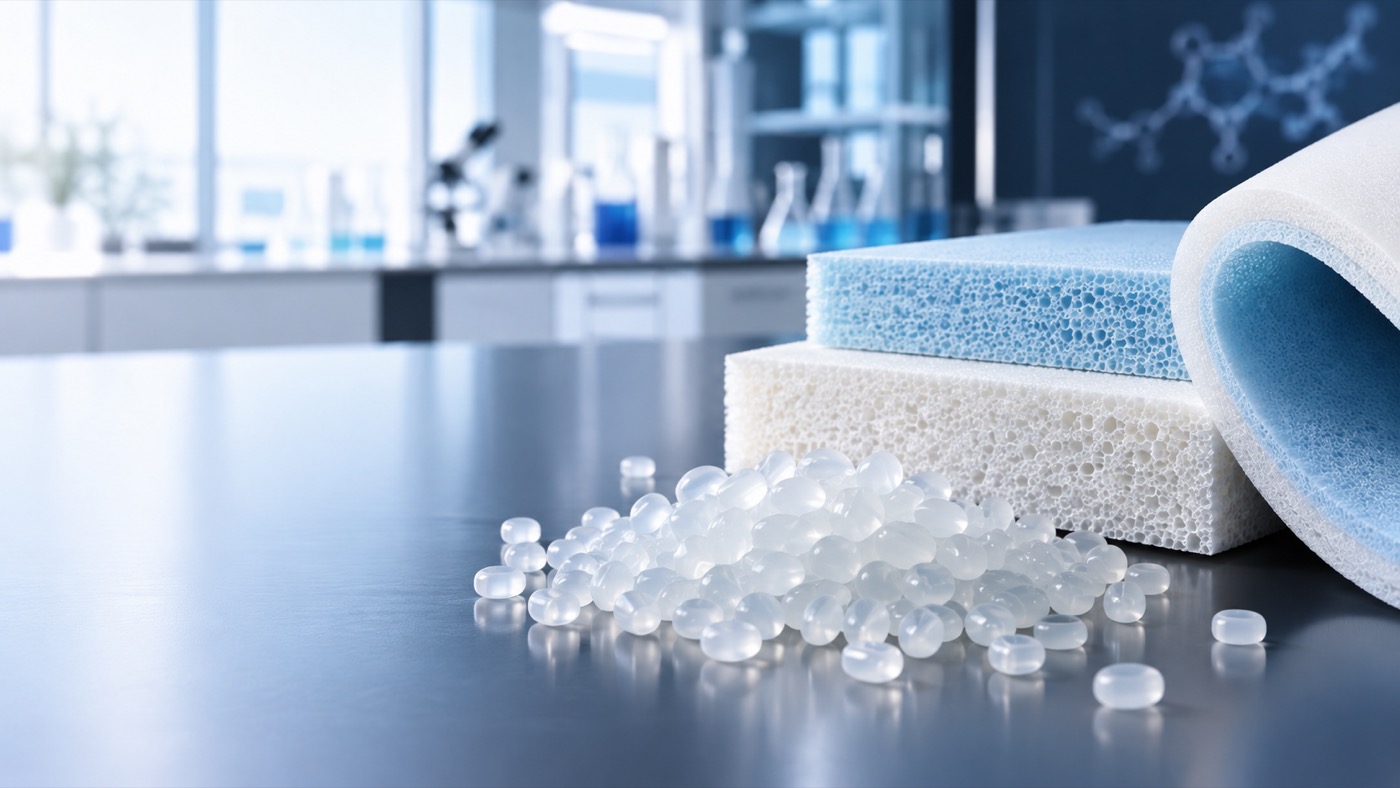
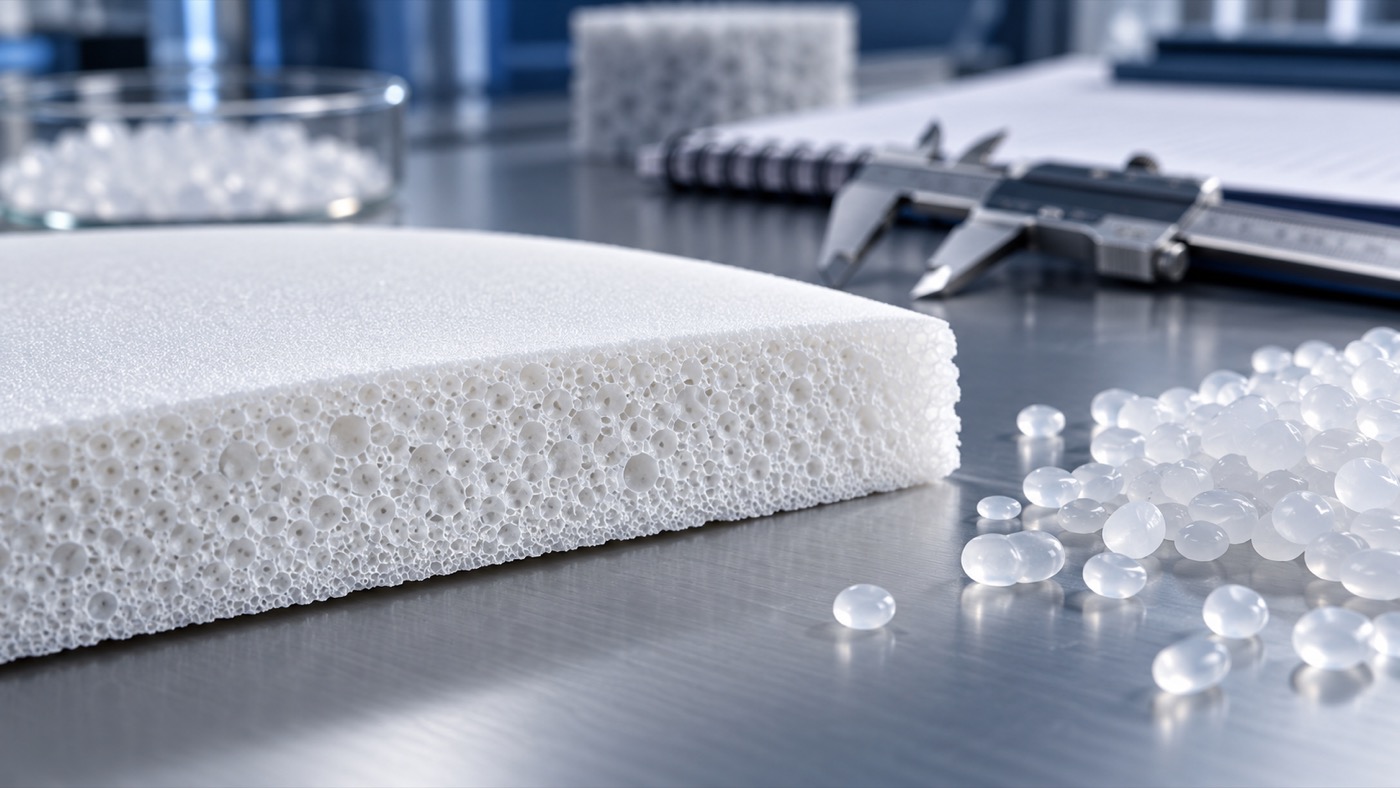
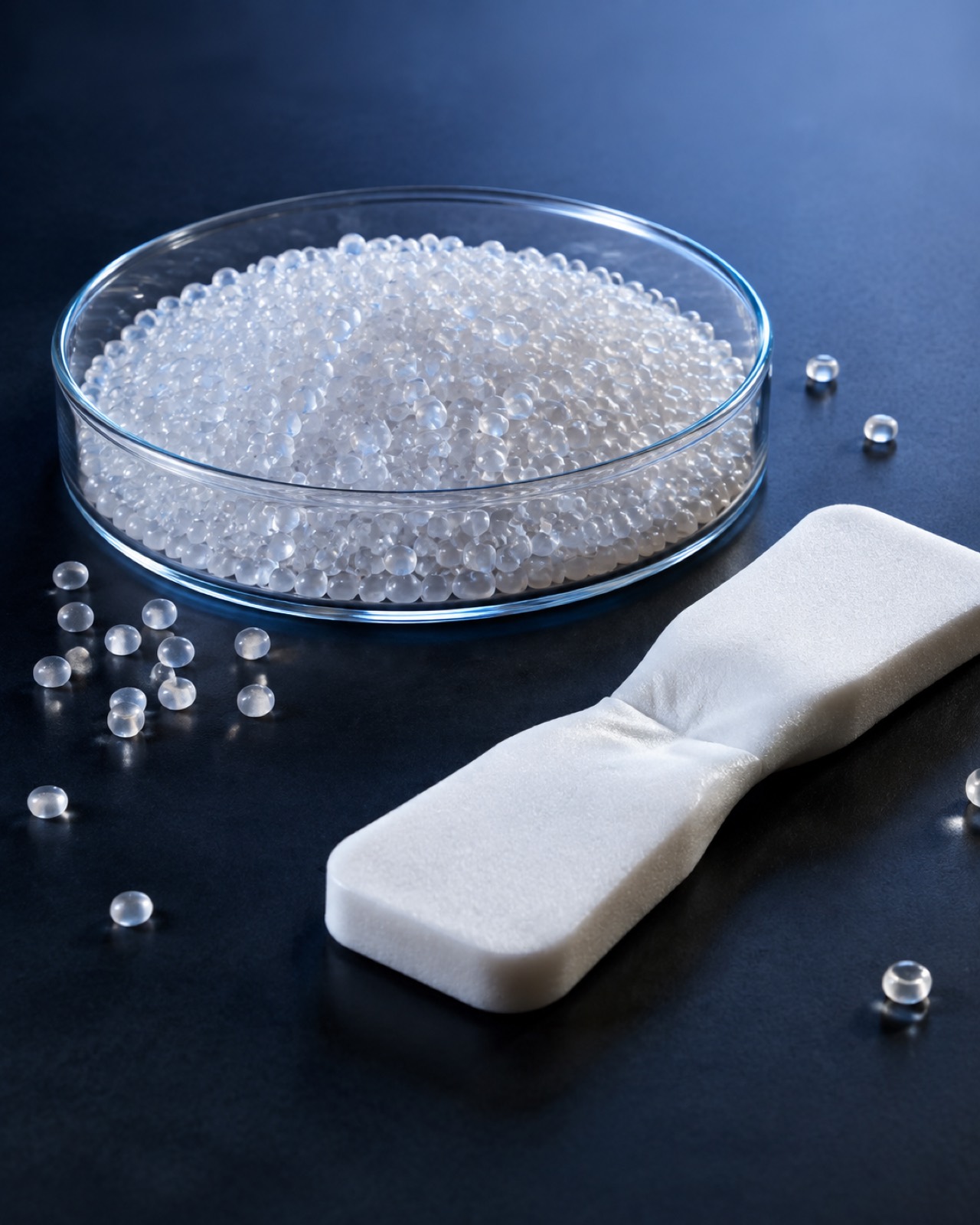
| Material appearance | Translucent white pellets |
| Material hardness | Approx. Shore A 40 |
| DSC melting peak | Approx. 64°C |
| Primary compatible systems | EVA/POE and elastomer foam formulations |
| Core function | Softening, rebound retention and improved dimensional stability after secondary processing |
| Applicable processes | Chemical foaming, injection foaming, compression molding, cold/hot pressing and lamination |
| Formulation approach | Adjust addition ratio according to target hardness, expansion ratio, mechanical properties and processing conditions |