
HK40
Lightweight, High-Rebound EVA Composite Foam
Soft Feel and Responsive Rebound for Shoe Midsole Design
HK40 | An EVA Foam Material for Midsole Development
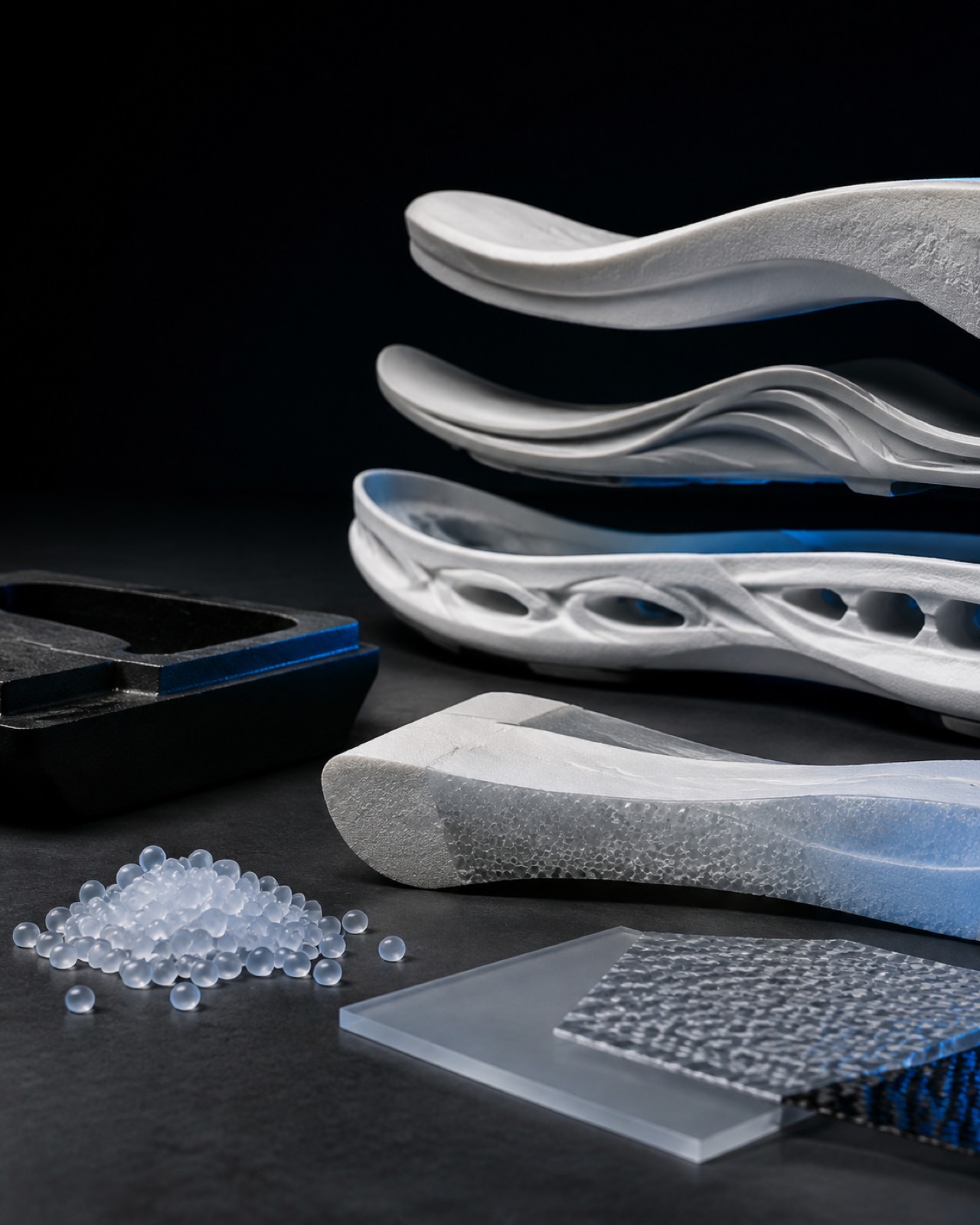
Midsole development starts with hardness, density and rebound targets. Softness, weight, support and deformation requirements vary by shoe design. Comparing material properties with these targets before formulation trials and finished-product testing can streamline development.
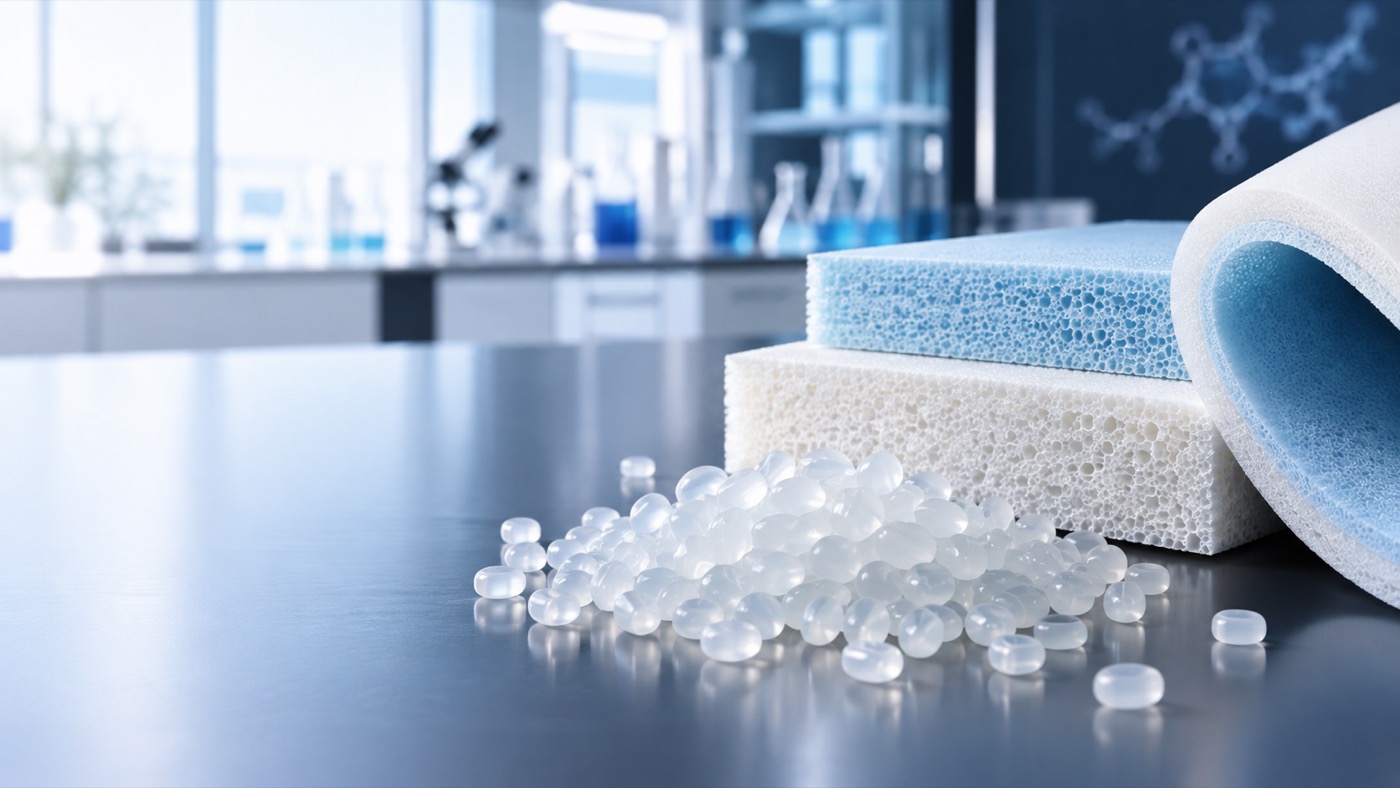
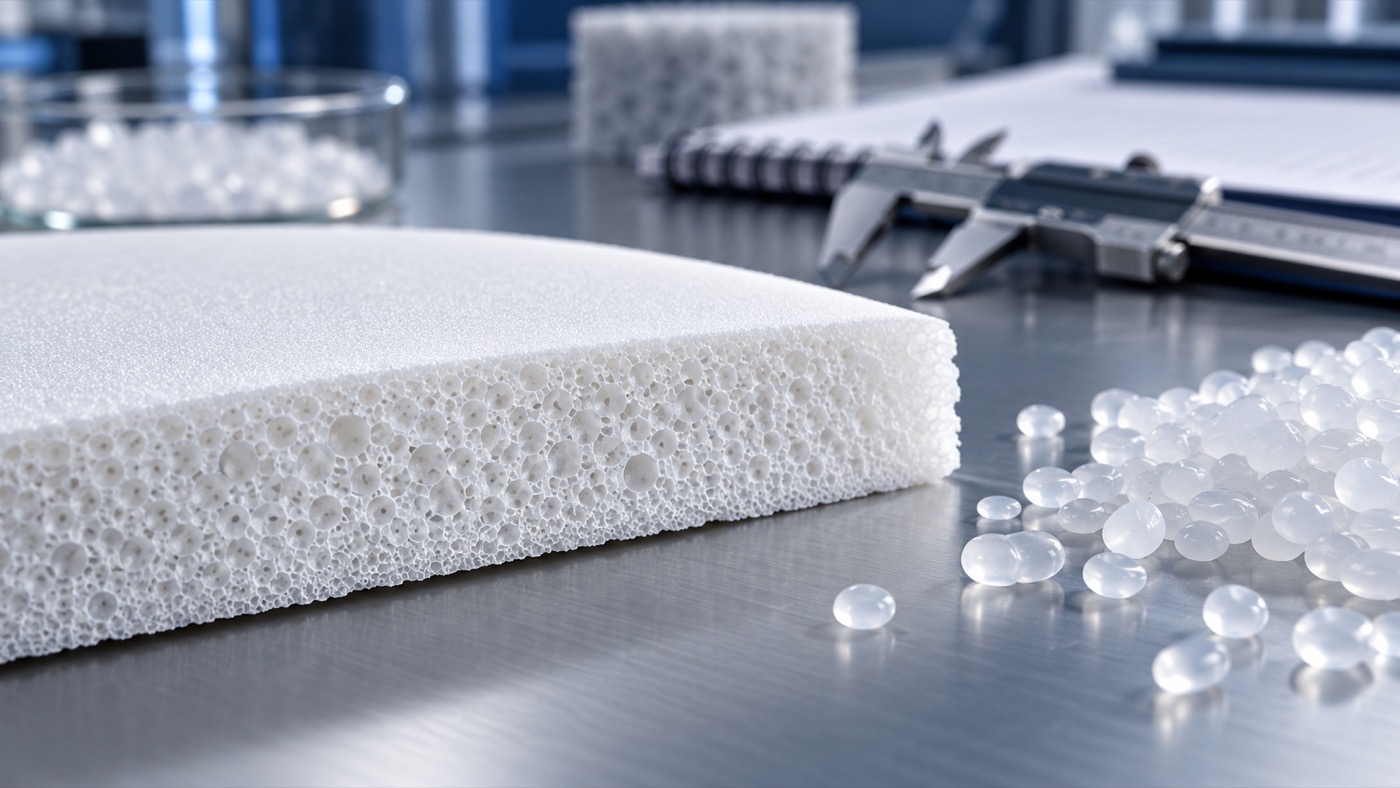
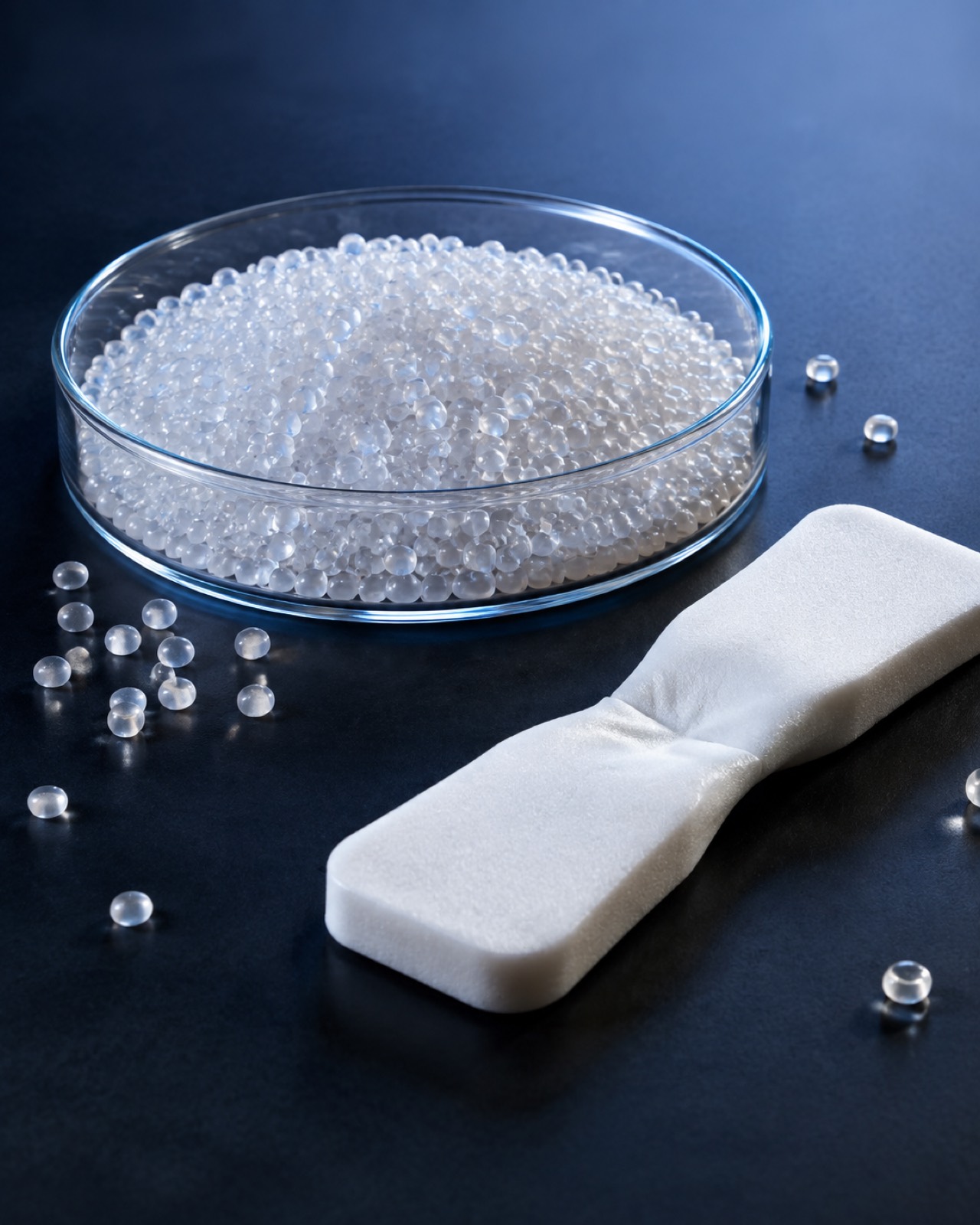
HK40 is an EVA composite foam for shoe midsoles, developed to balance soft feel, molded density and elastic response. In this trial, the secondary-molded Phylon sample recorded 41 Asker C hardness, 0.16 g/cm³ density and 69% ball rebound, along with approximately 230% elongation at break and 22 kgf/cm² tensile strength. These measured properties provide a basis for material selection and subsequent development trials.
Three Key Properties After Secondary Molding
| Soft Feel | Hardness | Lightweight Design | Density | Elastic Response | Ball Rebound |
|---|---|---|
| 41 Asker C | 0.16 g/cm³ | 69% |
The above results were obtained under the specific trial conditions used in this evaluation and are not guaranteed mass-production specifications. Hardness, density and ball rebound alone do not establish the cushioning performance or durability of a finished shoe.
Product Positioning | Matching Material Trials to Target Specifications
Midsole development calls for a balance of underfoot feel, weight, support and rebound appropriate to the intended footwear. Based on the secondary-molded sample results of 41 Asker C hardness, 0.161 g/cm³ density and 69% ball rebound in this trial, HK40 is a candidate for midsole projects prioritizing soft feel, lightweight design and elastic response. Mold geometry, processing conditions and finished-product performance testing should then be evaluated to determine suitability for the intended shoe design.
| Development Focus | HK40 Trial Data and Material Selection Relevance |
|---|---|
| Softness / Underfoot Feel | A hardness of 41 Asker C after secondary molding provides a reference point for soft-feel midsole development. |
| Density / Material Weight | The 0.16 g/cm³ density after secondary molding can be used to estimate midsole volume and material usage; finished-shoe weight also depends on structural design. |
| Energy Return | A ball rebound of 69% is an initial indicator of elastic recovery; actual cushioning and energy return require separate verification. |
| Deformation / Mechanical Properties | Approximately 230% elongation at break and 22 kgf/cm² tensile strength can inform bending, deformation and structural-strength assessments. |
HK40 Measured Properties | After Phylon Secondary Molding
| Test Item | Method / Condition | Unit | HK40 Result |
|---|---|---|---|
| Hardness | ASTM D2240 | Asker C | 41 |
| Density | ASTM D297 | g/cm³ | 0.16 |
| Ball Rebound | DIN 53512 | % | 69 |
| Tensile Strength | ASTM D412 | kgf/cm² | 22 |
| Elongation at Break | ASTM D412 | % | 230 |
| Tear Strength | ASTM D624 | kgf/cm | 11 |
| Thermal Shrinkage | 60°C × 2 h | % | 1.33 |
| Compression Set | 50°C × 6 h | % | 28 |
HK40 Preform Properties | After Initial Foaming
Preform properties can help guide initial foaming control, subsequent compression-molding settings and material quality checks. Final material selection should primarily be based on the properties measured after secondary molding.
| Test Item | Unit / Condition | HK40 Result |
|---|---|---|
| Hardness | Asker C | 31 |
| Density | g/cm³ | 0.088 |
| Tensile Strength | kgf/cm² | 11 |
| Elongation | % | 168 |
| Tear Strength | kgf/cm | 5.6 |
| Compression Set | 50°C × 6 h, % | 61 |
| Thermal Shrinkage | 60°C × 2 h, % | 2 |
| Ball Rebound | % | 58 |
| Foaming Expansion Ratio | % | 210 |
From Material Trials to Finished-Midsole Validation
| Development Stage | Recommended Checks |
|---|---|
| Define Targets | Confirm target hardness, density, rebound, support and weight. |
| Trial Conditions | Record formulation, expansion ratio, mold thickness, compression ratio, time and temperature. |
| Property Validation | Verify tear and tensile strengths, elongation, thermal shrinkage, compression set and lot-to-lot consistency. |
| Product Evaluation | Perform dynamic compression, landing impact, flex-fatigue and wear trials appropriate to the shoe design. |
Applications and Material Trial Collaboration
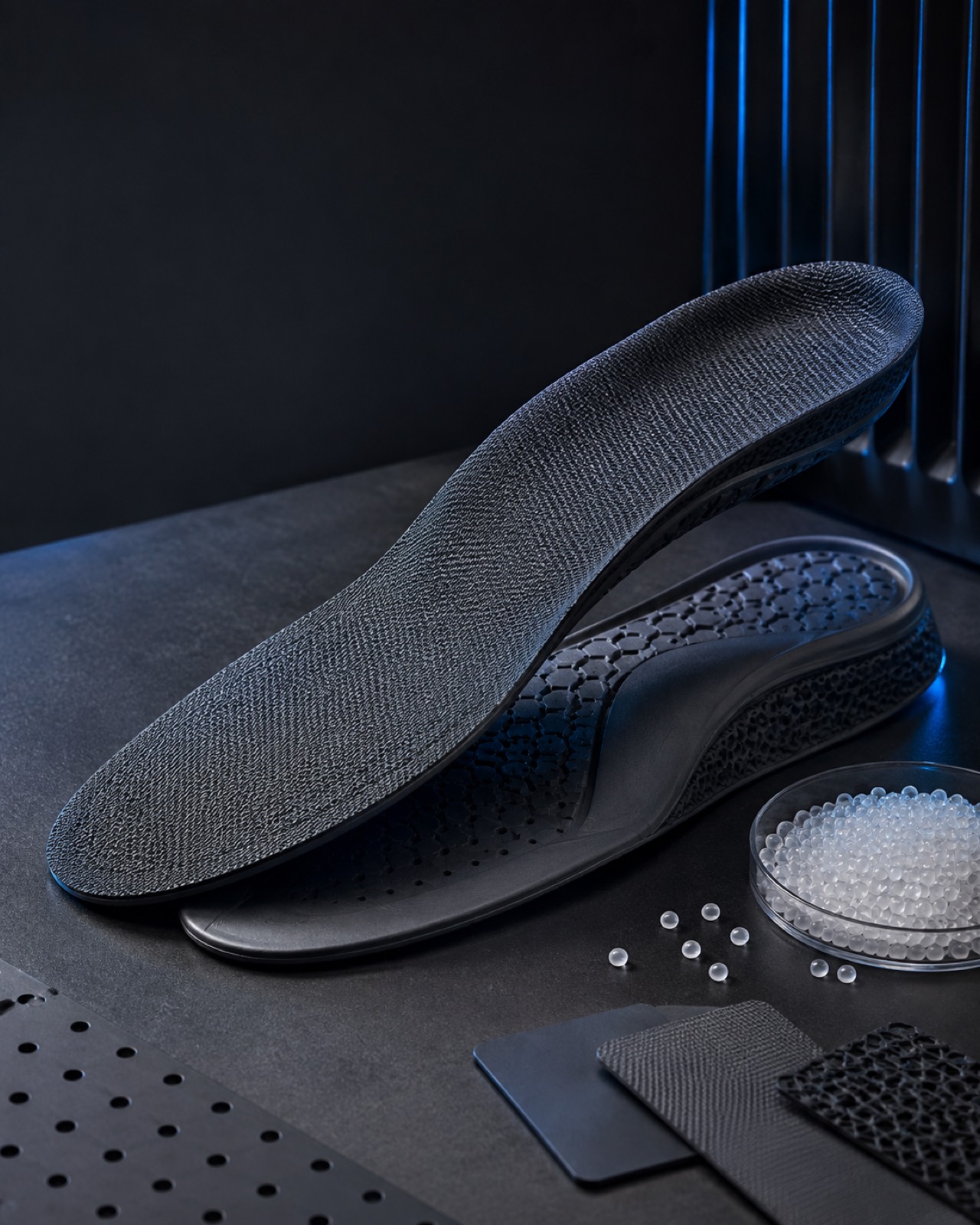
HK40 is primarily intended for midsole development in athletic and casual footwear. Applications such as functional insoles may also be evaluated according to product requirements. FOUND FAIR can support material trials and property evaluation based on target hardness, density, rebound, mechanical performance and processing conditions, helping development teams assess suitability against product specifications.
Data notice: This document provides material selection reference data from HK40 under specific trial conditions and does not constitute a guarantee of mass-production specifications.