

01Introduction

Understanding the Real Differences Between Biobased Content, Carbon-14, and Biodegradability
Understanding the Real Differences Between Biobased Content, Carbon-14, and Biodegradability
A Guide to Interpreting Materials Reports, from ASTM D6866 and ISO 16620 to GTE-8075
A Guide to Interpreting Materials Reports, from ASTM D6866 and ISO 16620 to GTE-8075
When a brand says that a plastic contains 70% biobased material, does that percentage refer to the source of its raw-material carbon, the total weight of the product, or the product's ability to break down in the natural environment? These three ideas are often combined in a single marketing claim, yet they are entirely different propositions in polymer science. Using a biobased-material report provided by Found Fair Plastic as a case study, this article establishes an interpretation framework for R&D, procurement, ESG, and brand teams.
When a brand says that a plastic contains 70% biobased material, does that percentage refer to the source of its raw-material carbon, the total weight of the product, or the product's ability to break down in the natural environment? These three ideas are often combined in a single marketing claim, yet they are entirely different propositions in polymer science. Using a biobased-material report provided by Found Fair Plastic as a case study, this article establishes an interpretation framework for R&D, procurement, ESG, and brand teams.
02The Bottom Line First: Three Terms Answer Three Different Questions
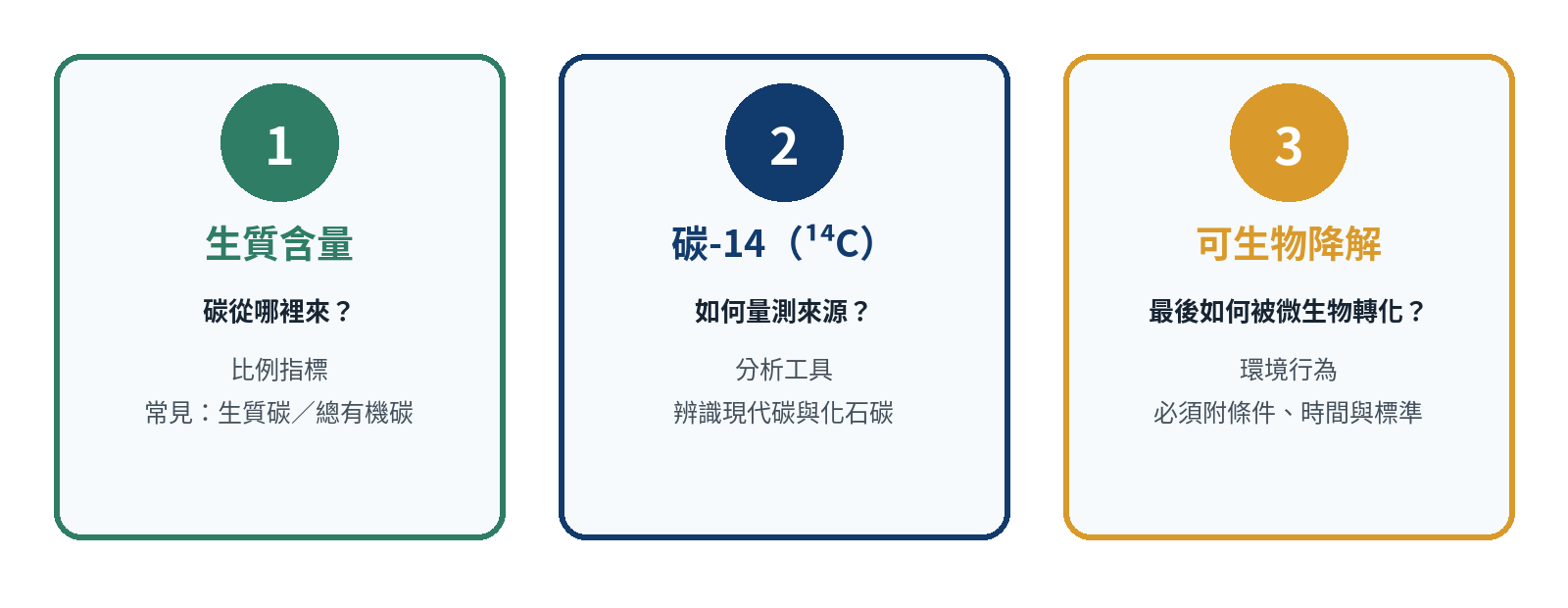
Figure 1 | Biobased content, carbon-14, and biodegradability belong to three different levels: proportion, measurement, and environmental behavior.
Figure 1 | Biobased content, carbon-14, and biodegradability belong to three different levels: proportion, measurement, and environmental behavior.
| Concept Concept | The Question It Actually Answers | Typical Basis Typical Basis | What Cannot Be Directly Inferred |
|---|---|---|---|
| Biobased Content | How much of the carbon in the product comes from recent biomass? | ASTM D6866、ISO 16620‑2 | It is not the same as the total-weight percentage and does not guarantee biodegradability. |
| Carbon ‑ 14 Carbon-14 | How can modern biogenic carbon be distinguished from fossil carbon? | Radiocarbon analysis using AMS, liquid scintillation counting, or similar methods | It is neither a degradation test nor a carbon-footprint assessment. |
| Biodegradability | Can microorganisms transform the material within a specified environment and time period? | Use EN 13432, ASTM D6400, ISO 17088, or another applicable standard according to the intended use. | It cannot be determined solely from plant origin, pulverization, or disappearance from view. |
The most important logic is that biobased content describes origin, carbon-14 is the measuring stick used to identify that origin, and biodegradability describes behavior at the end of the life cycle. All three can apply at the same time, or they can be completely independent of one another.
The most important logic is that biobased content describes origin, carbon-14 is the measuring stick used to identify that origin, and biodegradability describes behavior at the end of the life cycle. All three can apply at the same time, or they can be completely independent of one another.
031 | Biobased Content: First Ask Whether the Denominator Is Carbon or Total Weight
The biobased carbon content reported under ASTM D6866 is generally the percentage of biomass-derived carbon relative to total organic carbon (TOC). If a formulation contains mineral fillers, metals, inorganic flame retardants, or other carbon-free components, this percentage is not necessarily equal to the biobased mass percentage of the product's total weight.
The biobased carbon content reported under ASTM D6866 is generally the percentage of biomass-derived carbon relative to total organic carbon (TOC). If a formulation contains mineral fillers, metals, inorganic flame retardants, or other carbon-free components, this percentage is not necessarily equal to the biobased mass percentage of the product's total weight.
Accordingly, the most precise meaning of "69.4% biobased carbon content" is that approximately 69.4% of the organic carbon covered by the test was identified as recent biogenic carbon. A claim about the biobased mass content of the entire product requires corresponding mass-balance calculations, elemental analysis, and standard methods, such as the framework in ISO 16620-4.
Accordingly, the most precise meaning of "69.4% biobased carbon content" is that approximately 69.4% of the organic carbon covered by the test was identified as recent biogenic carbon. A claim about the biobased mass content of the entire product requires corresponding mass-balance calculations, elemental analysis, and standard methods, such as the framework in ISO 16620-4.
042 | Carbon-14: Why Can It Distinguish Modern Carbon from Fossil Carbon?
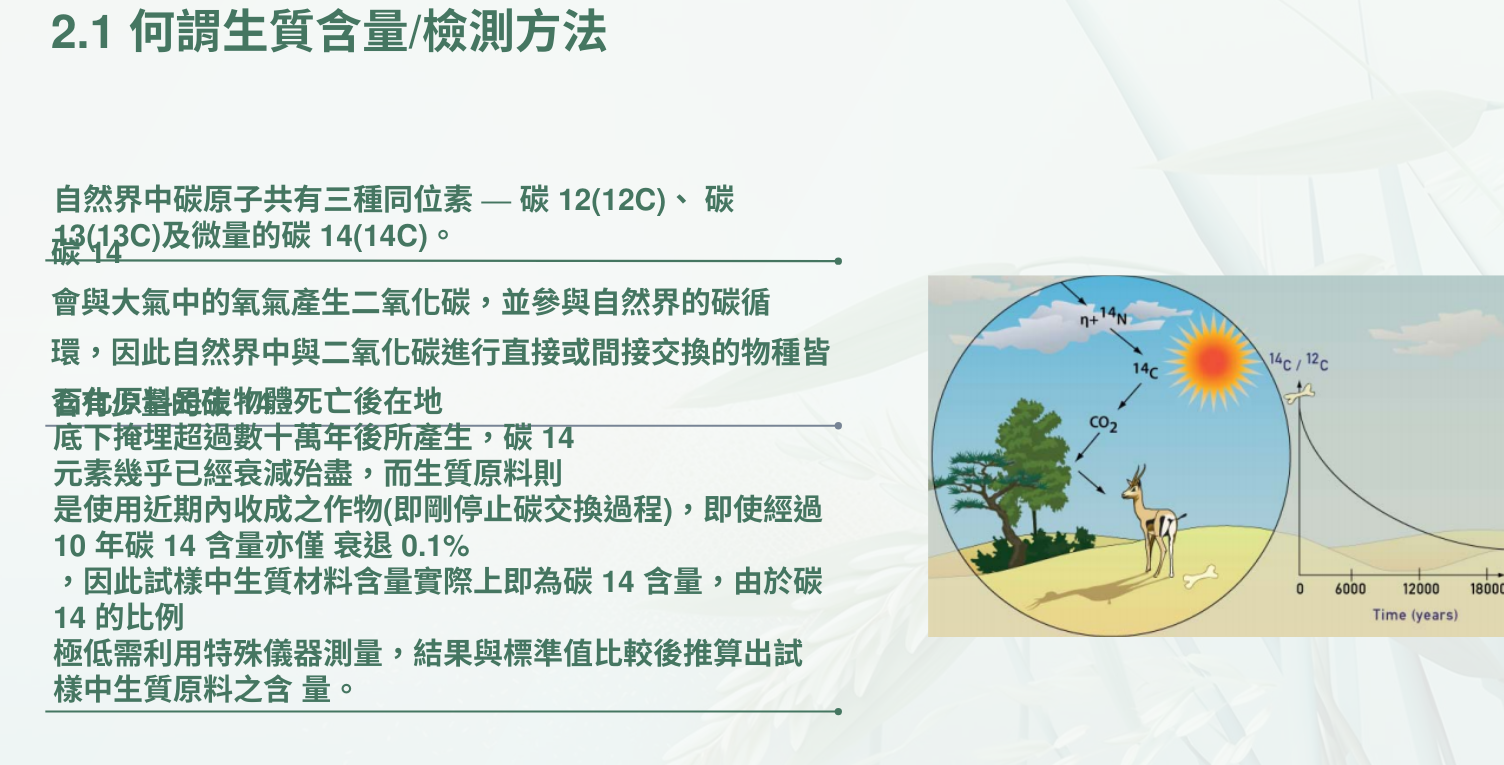
Figure 2 | The original report explains the principle of carbon-14 testing through the concepts of the carbon cycle and radioactive decay. Source: presentation provided by Found Fair Plastic.
Figure 2 | The original report explains the principle of carbon-14 testing through the concepts of the carbon cycle and radioactive decay. Source: presentation provided by Found Fair Plastic.
Cosmic rays interact with atmospheric nitrogen to form carbon-14 (¹⁴C). It enters carbon dioxide and then moves into the biosphere through plant photosynthesis. Living organisms continuously exchange carbon and therefore retain a ¹⁴C signal close to that of the contemporary atmosphere. After death, this exchange stops, and ¹⁴C decays with a half-life of about 5,730 years. Petroleum, coal, and natural gas are millions of years old, so their ¹⁴C levels are too low to detect readily; recent biomass, by contrast, still retains a measurable signal.
Cosmic rays interact with atmospheric nitrogen to form carbon-14 (¹⁴C). It enters carbon dioxide and then moves into the biosphere through plant photosynthesis. Living organisms continuously exchange carbon and therefore retain a ¹⁴C signal close to that of the contemporary atmosphere. After death, this exchange stops, and ¹⁴C decays with a half-life of about 5,730 years. Petroleum, coal, and natural gas are millions of years old, so their ¹⁴C levels are too low to detect readily; recent biomass, by contrast, still retains a measurable signal.
In practice, a laboratory can measure a sample's ¹⁴C signal using accelerator mass spectrometry (AMS) or another method and compare it with a modern reference value to estimate the proportion of contemporary or biogenic carbon. ASTM D6866 explicitly states that the method addresses only biobased carbon content; it does not assess environmental impacts, functional performance, regulatory compliance, or biodegradability.
In practice, a laboratory can measure a sample's ¹⁴C signal using accelerator mass spectrometry (AMS) or another method and compare it with a modern reference value to estimate the proportion of contemporary or biogenic carbon. ASTM D6866 explicitly states that the method addresses only biobased carbon content; it does not assess environmental impacts, functional performance, regulatory compliance, or biodegradability.
Four things to look out for in your measurement results
Four Points to Note When Interpreting Measurement Results
Sampling must be representative: Multilayer materials, inks, adhesives, or different batches may produce different results.
Sampling must be representative: Multilayer materials, inks, adhesives, or different batches may produce different results.
The value has measurement uncertainty: ASTM D6866 notes that overall interlaboratory uncertainty may reach approximately ±3 percentage points, so small differences should not be overinterpreted.
The value has measurement uncertainty: ASTM D6866 notes that overall interlaboratory uncertainty may reach approximately ±3 percentage points, so small differences should not be overinterpreted.
The claim should state its basis: Clearly identify whether the figure is biobased carbon content, an organic-carbon basis, or a total-mass basis.
The claim should state its basis: Clearly identify whether the figure is biobased carbon content, an organic-carbon basis, or a total-mass basis.
Carbon origin is not the same as carbon footprint: Whether emissions are truly reduced must still be assessed through life-cycle assessment (LCA), including agriculture, energy, transportation, processing, and end-of-life scenarios.
Carbon origin is not the same as carbon footprint: Whether emissions are truly reduced must still be assessed through life-cycle assessment (LCA), including agriculture, energy, transportation, processing, and end-of-life scenarios.
053 | Biodegradability: Not a Material Name, but a Set of Conditions, Time Limits, and Thresholds
Biodegradation of a polymer means that microorganisms act on it in a specific environment and ultimately convert it into carbon dioxide under aerobic conditions, methane under anaerobic conditions, water, inorganic salts, and biomass. Fragmentation, disintegration, or disappearance from view only means that the material has become smaller; it does not mean that the polymer has been fully mineralized.
Biodegradation of a polymer means that microorganisms act on it in a specific environment and ultimately convert it into carbon dioxide under aerobic conditions, methane under anaerobic conditions, water, inorganic salts, and biomass. Fragmentation, disintegration, or disappearance from view only means that the material has become smaller; it does not mean that the polymer has been fully mineralized.
A biodegradability claim must therefore specify the environment (industrial composting, home composting, soil, freshwater, or marine), temperature, moisture content, microbial conditions, test duration, and pass criteria. Compostability is a specific subset of biodegradability and generally must also satisfy requirements for disintegration, heavy-metal limits, compost quality, and ecotoxicity.
A biodegradability claim must therefore specify the environment (industrial composting, home composting, soil, freshwater, or marine), temperature, moisture content, microbial conditions, test duration, and pass criteria. Compostability is a specific subset of biodegradability and generally must also satisfy requirements for disintegration, heavy-metal limits, compost quality, and ecotoxicity.
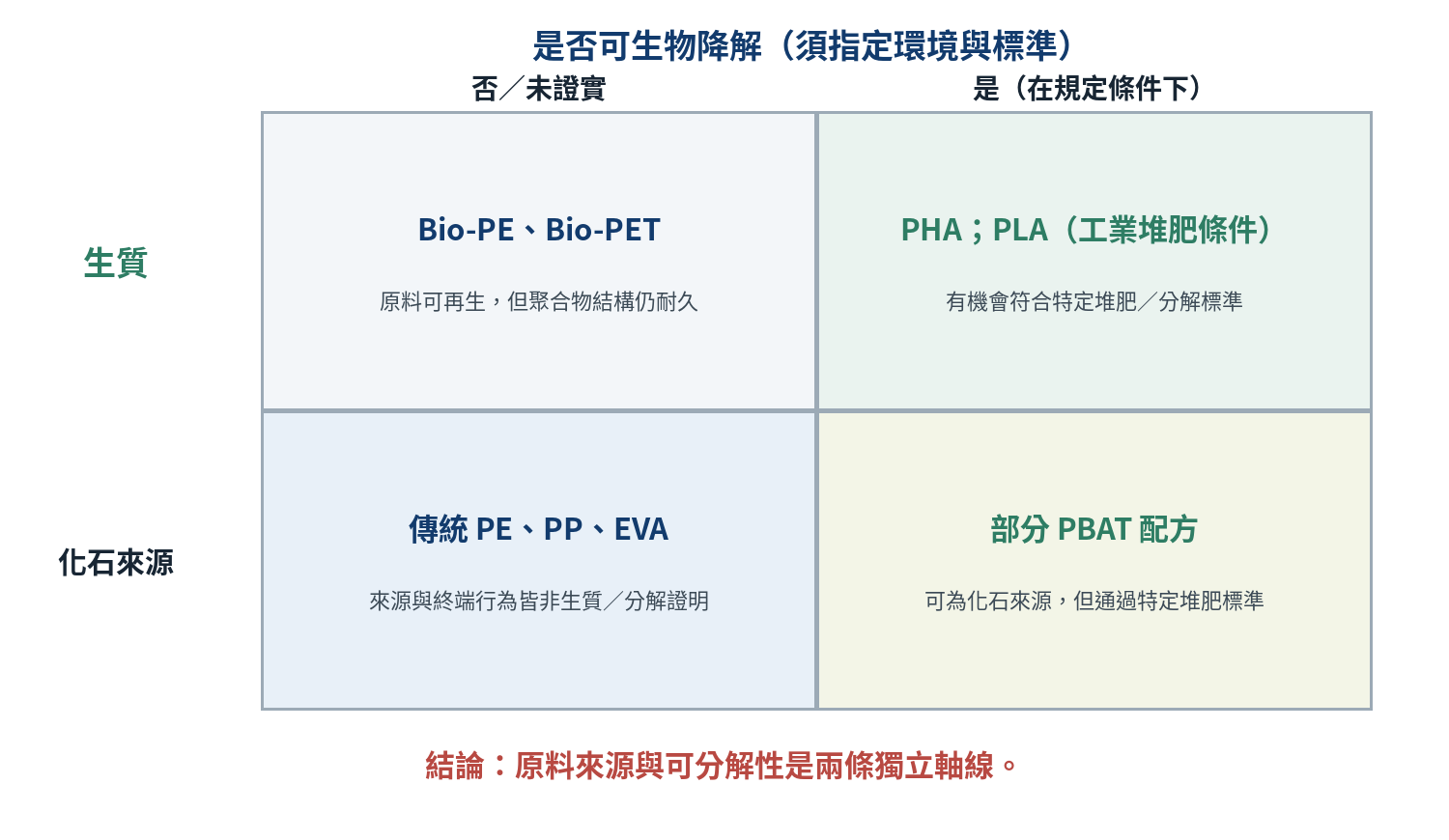
Figure 3 | Material origin and end-of-life behavior are two independent axes. The examples represent only typical material structures; actual claims must be based on the formulation and test results.
Figure 3 | Material origin and end-of-life behavior are two independent axes. The examples represent only typical material structures; actual claims must be based on the formulation and test results.
Common error equals signs
Common False Equivalences
Biobased plastic ≠ biodegradable plastic: Bio-PE and Bio-PET still have durability similar to their petrochemical counterparts.
Biobased plastic ≠ biodegradable plastic: Bio-PE and Bio-PET still have durability similar to their petrochemical counterparts.
Fossil origin ≠ necessarily nondegradable: Some PBAT formulations can comply with specific industrial-composting standards.
Fossil origin ≠ necessarily nondegradable: Some PBAT formulations can comply with specific industrial-composting standards.
PLA ≠ rapid degradation in every environment: It generally requires the temperature, humidity, and time window of industrial composting.
PLA ≠ rapid degradation in every environment: It generally requires the temperature, humidity, and time window of industrial composting.
Oxidative fragmentation or physical pulverization ≠ complete biodegradation: Carbon conversion and standardized testing are required as evidence.
Oxidative fragmentation or physical pulverization ≠ complete biodegradation: Carbon conversion and standardized testing are required as evidence.
06Report Case Study: How Should the 69.4% and 70% Figures for GTE-8075 Be Interpreted?
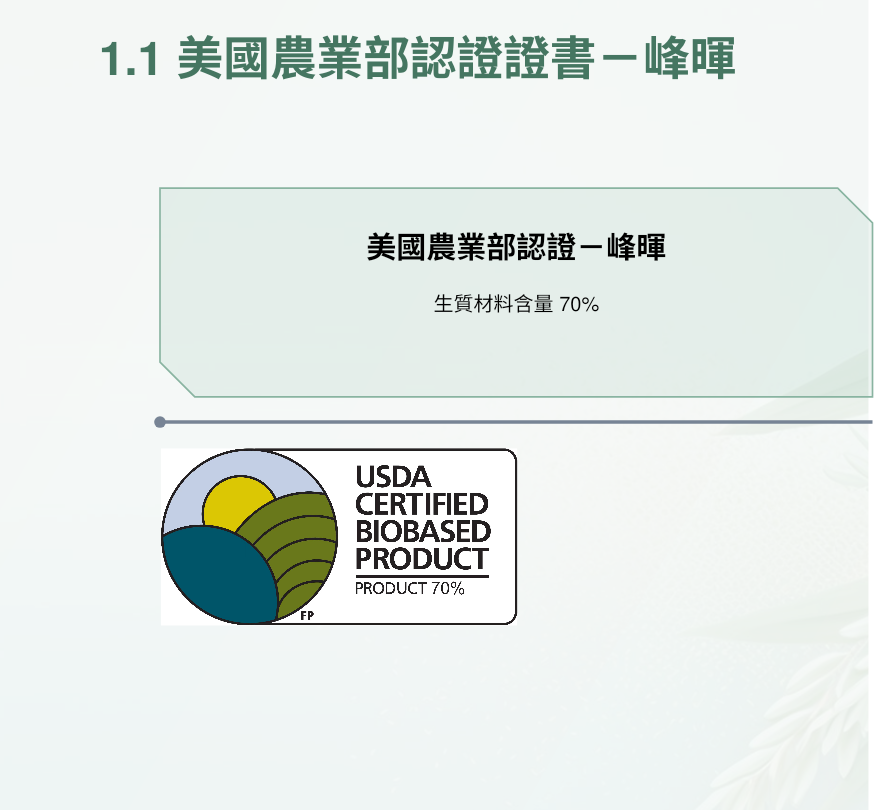
Figure 4 | The original presentation shows the USDA Certified Biobased Product label for GTE-8075, with a stated value of 70%. Source: presentation provided by Found Fair Plastic.
Figure 4 | The original presentation shows the USDA Certified Biobased Product label for GTE-8075, with a stated value of 70%. Source: presentation provided by Found Fair Plastic.
The Found Fair Plastic presentation states that Beta Laboratory measured the biobased carbon content of GTE-8075 at 69.4% and also shows a USDA Certified Biobased Product label stating 70%. These two presentations can reasonably be understood as a difference between a measured value and the rounding or display convention used for certification labeling. Any formal external claim should still follow the product, formulation, labeling rules, and scope covered by the currently valid certificate.
The Found Fair Plastic presentation states that Beta Laboratory measured the biobased carbon content of GTE-8075 at 69.4% and also shows a USDA Certified Biobased Product label stating 70%. These two presentations can reasonably be understood as a difference between a measured value and the rounding or display convention used for certification labeling. Any formal external claim should still follow the product, formulation, labeling rules, and scope covered by the currently valid certificate.
| What This Information Can Support | What This Information Cannot Support on Its Own |
|---|---|
| ✓ The tested sample contains a high proportion of recent biogenic carbon. | ✕ The product will naturally decompose in soil, the ocean, or a home environment. |
| ✓ The report displays a USDA Certified Biobased Product label stating 70%. | ✕ Plant-derived matter accounts for 69.4% or 70% of the product's total weight. |
| ✓ Biobased substitution can form part of a raw-material sourcing strategy. | ✕ The product is necessarily low-carbon, carbon-neutral, or zero-carbon. |
The unfinished press-release template in the presentation contains placeholders for the date, executive's name, and statement. This article does not treat those placeholders as citable evidence; the information should be checked against official certification records before external publication.
The unfinished press-release template in the presentation contains placeholders for the date, executive's name, and statement. This article does not treat those placeholders as citable evidence; the information should be checked against official certification records before external publication.
07Material Performance and Environmental Claims Must Be Verified Separately
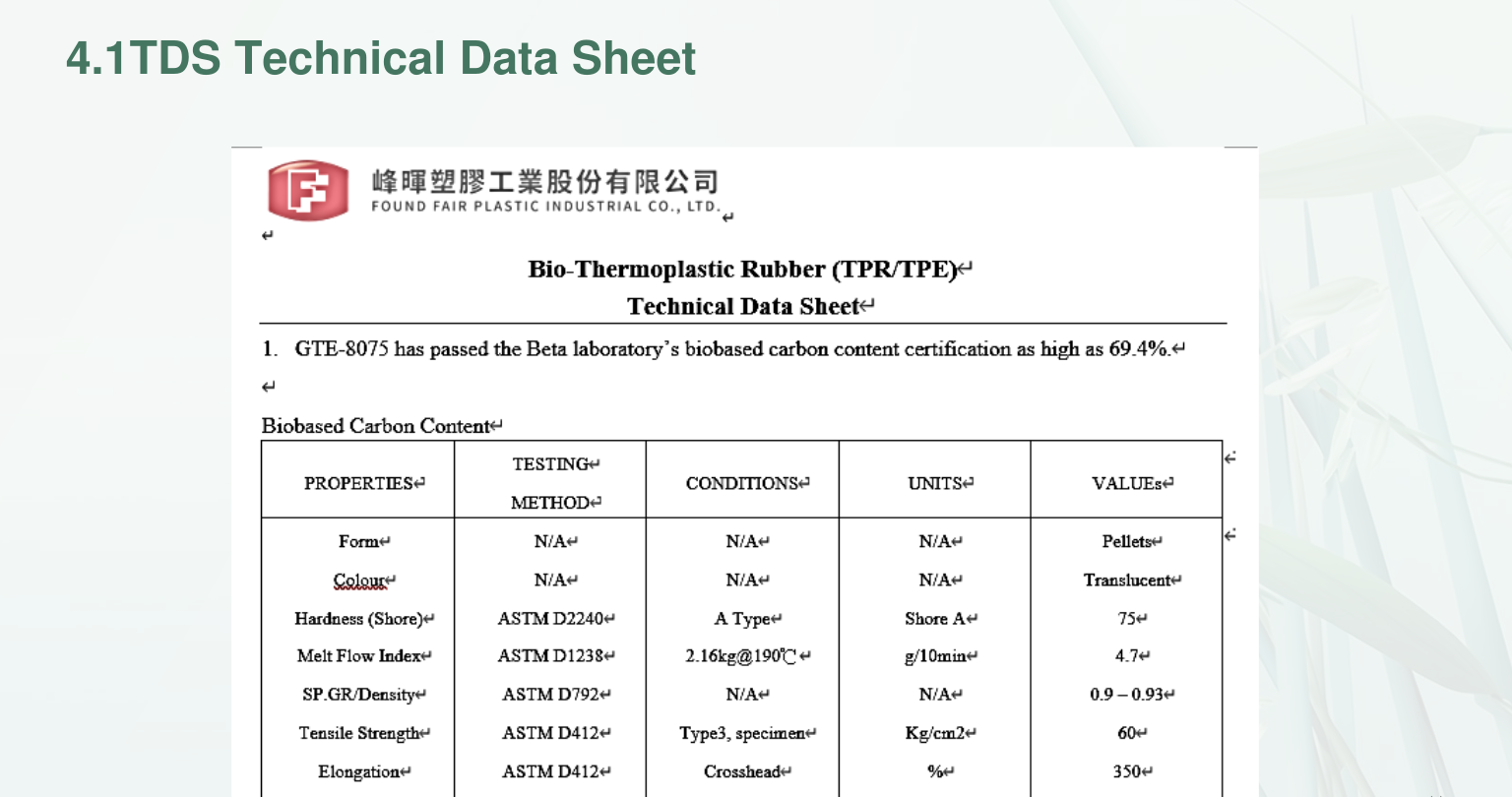
Figure 5 | The GTE-8075 technical data page lists hardness, flow, density, tensile strength, elongation, tear strength, and other properties. Source: presentation provided by Found Fair Plastic.
Figure 5 | The GTE-8075 technical data page lists hardness, flow, density, tensile strength, elongation, tear strength, and other properties. Source: presentation provided by Found Fair Plastic.
According to the presentation's technical data, GTE-8075 is a translucent pelletized material with a listed hardness of Shore A 75, a melt flow index of 4.7 g/10 min (ASTM D1238, 2.16 kg, 190°C), a density of approximately 0.90-0.93, and data for tensile strength, elongation, and tear strength. This information supports a preliminary assessment of processing and mechanical performance and belongs to a different evidence chain from proof of biobased origin.
According to the presentation's technical data, GTE-8075 is a translucent pelletized material with a listed hardness of Shore A 75, a melt flow index of 4.7 g/10 min (ASTM D1238, 2.16 kg, 190°C), a density of approximately 0.90-0.93, and data for tensile strength, elongation, and tear strength. This information supports a preliminary assessment of processing and mechanical performance and belongs to a different evidence chain from proof of biobased origin.
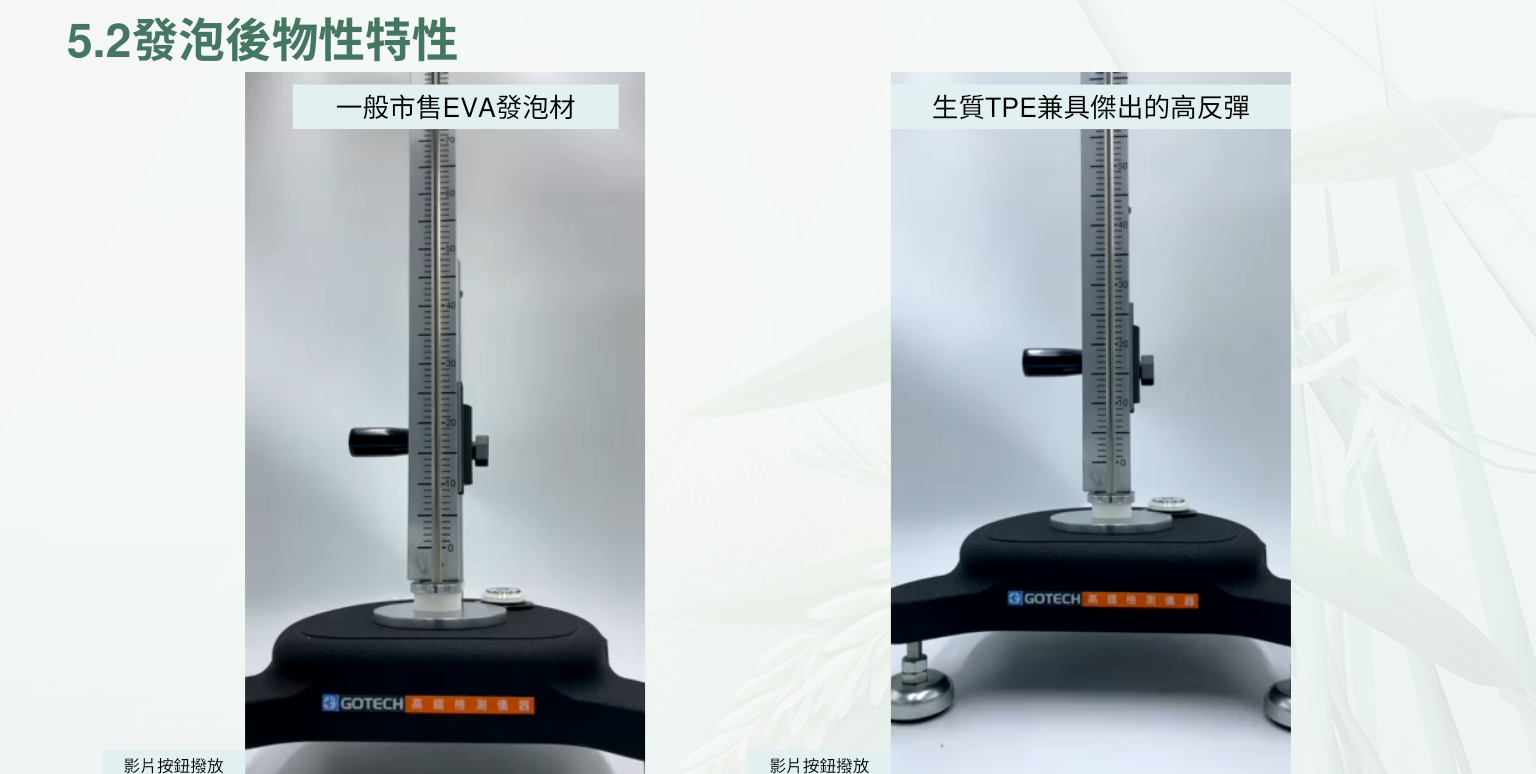
Figure 6 | The presentation uses foamed samples to illustrate a conceptual rebound comparison between conventional EVA and biobased TPE. Formal material selection should still be based on standardized tests and complete test conditions.
Figure 6 | The presentation uses foamed samples to illustrate a conceptual rebound comparison between conventional EVA and biobased TPE. Formal material selection should still be based on standardized tests and complete test conditions.
The presentation also compares the rebound of conventional EVA foam with that of biobased TPE. For footwear, cushioning materials, or sporting goods, rebound, compression set, tear strength, density, shrinkage, and heat aging directly affect the finished product. Even excellent performance and high biobased carbon content, however, do not justify extending the claim to biodegradability or compostability.
The presentation also compares the rebound of conventional EVA foam with that of biobased TPE. For footwear, cushioning materials, or sporting goods, rebound, compression set, tear strength, density, shrinkage, and heat aging directly affect the finished product. Even excellent performance and high biobased carbon content, however, do not justify extending the claim to biodegradability or compostability.
"Dual-track verification" recommended by the R&D side
Recommended "Two-Track Verification" for R&D
Origin track: Verify biobased carbon using ASTM D6866 or ISO 16620-2; when necessary, also assess biobased mass content and supply-chain traceability.
Origin track: Verify biobased carbon using ASTM D6866 or ISO 16620-2; when necessary, also assess biobased mass content and supply-chain traceability.
Performance track: Verify expansion ratio, density, rebound, compression set, thermal shrinkage, hydrolysis resistance, and aging according to the final application.
Performance track: Verify expansion ratio, density, rebound, compression set, thermal shrinkage, hydrolysis resistance, and aging according to the final application.
End-of-life track: Select an applicable degradation or compostability standard only after the target market and treatment scenario have been defined.
End-of-life track: Select an applicable degradation or compostability standard only after the target market and treatment scenario have been defined.
08How Should Brands and Procurement Teams Choose the Right Test? Make the Decision with One Table
| What Do You Need to Prove? | Recommended Method/Standard | What is the output Output | Claim Considerations |
|---|---|---|---|
| Whether the Carbon Comes from Biomass | ASTM D6866;ISO 16620‑2 | Biobased Carbon Percentage | State clearly that organic carbon is the denominator. |
| Overall Biobased Mass Proportion | ISO 16620-4/elemental analysis and mass calculations | Biobased Mass Percentage | Do not directly substitute the ¹⁴C value. |
| Industrial Compostability | EN 13432, ASTM D6400, or ISO 17088, depending on the market | Combined results for biodegradation, disintegration, toxicity, and related criteria | Limited to the specified composting conditions |
| Soil/Marine/Home Composting | Environment-specific methods and certifications | Results for a specific environment and time period | Do not extrapolate across environments. |
| Product Carbon Footprint | ISO 14040/14044;ISO 14067 | CO₂e and the system boundary | Disclose the boundary, data, and assumptions. |
Directly Adoptable Compliance Copy
Compliance-Oriented Wording That Can Be Used Directly
More precise: "According to the tested sample and report, GTE-8075 has a biobased carbon content of 69.4%, and the presentation displays a USDA Certified Biobased Product label stating 70%. Biobased content does not indicate biodegradability."
More precise: "According to the tested sample and report, GTE-8075 has a biobased carbon content of 69.4%, and the presentation displays a USDA Certified Biobased Product label stating 70%. Biobased content does not indicate biodegradability."
Avoid: "Made from 70% plants, so it will decompose naturally after disposal," "Using biobased material means zero carbon," or "Carbon-14 tested, therefore compostable." These statements conflate origin, weight, carbon footprint, and end-of-life behavior.
Avoid: "Made from 70% plants, so it will decompose naturally after disposal," "Using biobased material means zero carbon," or "Carbon-14 tested, therefore compostable." These statements conflate origin, weight, carbon footprint, and end-of-life behavior.
09Conclusion: Turn "Green Materials" into Verifiable Engineering Language
Professional communication about sustainable materials is not a matter of stacking environmental adjectives. It means answering each question in turn: Where does the raw-material carbon come from? How is it measured? Under what conditions will the product reach the end of its life, and what will happen then? Biobased carbon can reduce dependence on fossil feedstocks, but degradability must be tested separately, and actual emissions-reduction benefits must be assessed through LCA. Only when R&D, procurement, and brand teams use the same evidence framework can a correct 70% figure avoid becoming an incorrect environmental promise.
Professional communication about sustainable materials is not a matter of stacking environmental adjectives. It means answering each question in turn: Where does the raw-material carbon come from? How is it measured? Under what conditions will the product reach the end of its life, and what will happen then? Biobased carbon can reduce dependence on fossil feedstocks, but degradability must be tested separately, and actual emissions-reduction benefits must be assessed through LCA. Only when R&D, procurement, and brand teams use the same evidence framework can a correct 70% figure avoid becoming an incorrect environmental promise.
10Reference Standards and Sources
1. ASTM International. ASTM D6866‑24, Standard Test Methods for Determining the Biobased Content of Solid, Liquid, and Gaseous Samples Using Radiocarbon Analysis. https://store.astm.org/d6866-24.html
2. ISO. ISO 16620‑2:2019, Plastics — Biobased content — Part 2: Determination of biobased carbon content. https://www.iso.org/standard/72474.html
3. USDA BioPreferred Program. Explanation of ASTM D6866 and the Certified Biobased Product Label. https://www.biopreferred.gov/BPResources/files/Article_071119.pdf
3. USDA BioPreferred Program. Explanation of ASTM D6866 and the Certified Biobased Product Label. https://www.biopreferred.gov/BPResources/files/Article_071119.pdf
4. ISO. ISO 16620‑4:2016, Plastics — Biobased content — Part 4: Determination of biobased mass content.
5. European Committee for Standardization. EN 13432; ASTM International. ASTM D6400; ISO. ISO 17088 (compostable-plastics standards selected according to market and product type).
5. European Committee for Standardization. EN 13432; ASTM International. ASTM D6400; ISO. ISO 17088 (compostable-plastics standards selected according to market and product type).
6. Found Fair Plastic Industrial Co., Ltd., Biobased Materials presentation: GTE-8075 biobased carbon, USDA labeling, technical data, and rebound illustration (source of the case study in this article).
6. Found Fair Plastic Industrial Co., Ltd., Biobased Materials presentation: GTE-8075 biobased carbon, USDA labeling, technical data, and rebound illustration (source of the case study in this article).
Edit note
Editorial Note
This article provides general information about material technology and environmental claims. It does not replace third-party certificates, regulatory advice, or a compliance determination for a specific product. Certification status, labeling rules, and standard editions may change; the latest certificates, test reports, and requirements in the market of sale should be verified before commercial launch or external claims are made.
This article provides general information about material technology and environmental claims. It does not replace third-party certificates, regulatory advice, or a compliance determination for a specific product. Certification status, labeling rules, and standard editions may change; the latest certificates, test reports, and requirements in the market of sale should be verified before commercial launch or external claims are made.